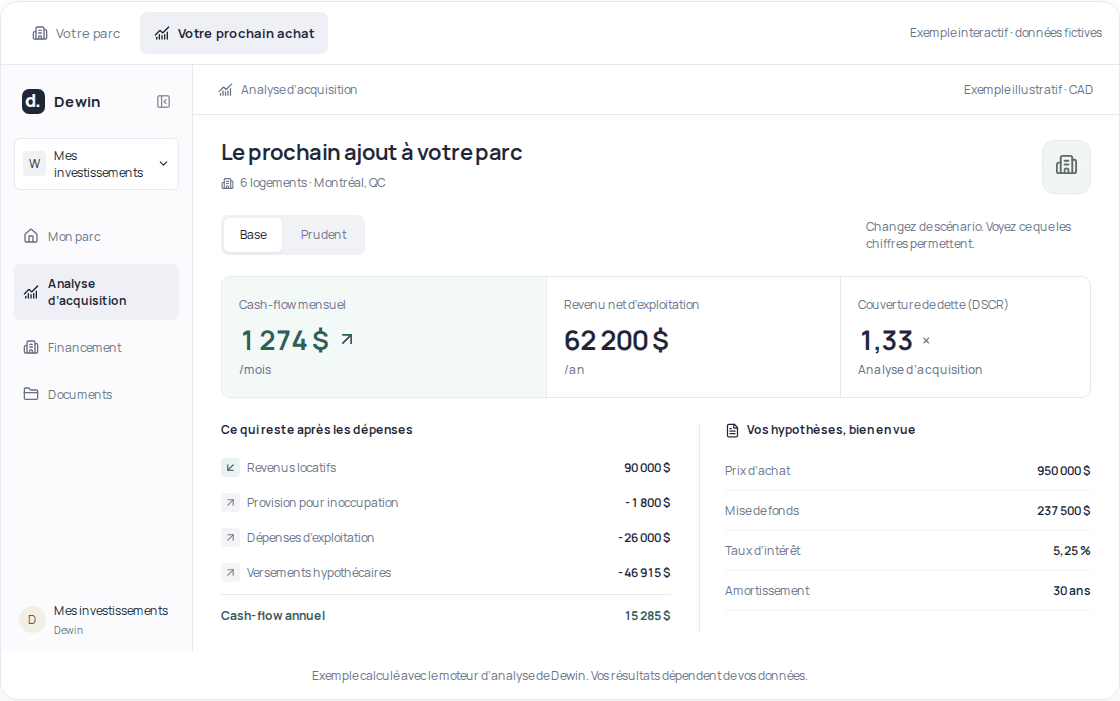
Start with the property’s evidence
Bring a listing link, a broker’s PDF, a spreadsheet or figures you enter yourself. Optional assisted extraction proposes values with their sources for you to review. It does not turn an incomplete listing into verified financial information.
Record the unit mix, rents, vacancy allowance, operating expenses, purchase price and financing assumptions. Missing information stays visible: an unknown expense is not a zero-dollar expense.
- Compare the rent roll with the leases and amounts actually collected.
- Include property taxes, insurance, utilities, maintenance and management.
- Separate operating costs, loan payments and capital improvements.
Compare the purchase under different assumptions
Build a base case and a more cautious scenario. Change rents, vacancy, expenses or financing to see how net operating income, debt coverage and cash flow respond. A higher projected return is useful only when you understand the assumptions behind it.
Dewin also models returns over the holding period, including a possible resale. Future rent growth, expenses and resale value are assumptions to test, not outcomes the software can promise.
See how financing changes the cash you need
Compare conventional and CMHC financing scenarios. The calculation distinguishes the loan limit supported by income from the limit based on property value. Insurance premiums and debt payments are part of the picture.
Use the free MLI Select calculator for an initial estimate, then confirm eligibility, current program terms and the lender’s underwriting assumptions before committing to a purchase.
Carry the analysis into ownership
Save the selected scenario and the reasoning behind a decision. Share a report by link with a broker or co-investor, or print it with the available sources and missing inputs.
When the acquisition becomes a property in your portfolio, keep the purchase assumptions as the reference for actual operations. Existing properties can also be added directly, without inventing a purchase analysis.